
What Is the Best Head Protection for Cerebral Palsy?
What Is the Best Head Protection for Cerebral Palsy?
For people with cerebral palsy who are at risk of falls, involuntary movement, or head impact, the best head protection is not simply padded headwear. It is head protection designed to help protect the brain by reducing impact severity and reducing rotational force transmission. That is why the most important indicators are CE or UKCA Category II PPE status and qualified rotational force reduction, not softness alone [1, 2, 3, 4].
Why might someone with cerebral palsy need head protection?
Cerebral palsy affects movement and coordination, and symptoms can include stiffness, floppiness, jerky or clumsy movement, random uncontrolled movement, muscle spasms, tremor, and balance problems [6, 7]. For some children and adults, this can increase the risk of falls, collisions, and head impact in everyday life [6, 7].
Not everyone with cerebral palsy needs protective headwear. But where there is a meaningful history of falls, instability, involuntary movement, or previous head impact, protective headwear may be worth considering as part of a broader safety plan alongside clinical advice, supervision, mobility support, and environmental risk reduction [8, 9].
Why do CE or UKCA Category II PPE and rotational force reduction matter?
UKCA / CE PPE regulation exists to ensure protective equipment placed on the market meets defined health and safety requirements [1, 2]. In Great Britain, HSE states that PPE placed on the market must be UKCA or CE marked, supplied with a declaration of conformity, and accompanied by instructions in English [1]. HSE also advises buyers to choose products that are CE or UKCA marked and to consider suitability, size, fit, compatibility, and weight [2]. In the EU, Regulation (EU) 2016/425 sets design and manufacturing requirements intended to protect user health and safety [10].
That matters because not all headwear sold for falls, neurological conditions, or special needs is positioned in the same way. Some products are best understood as padded garments. Others are designed and assessed as genuine protective equipment.
For NeuroSure, that is the right comparison framework. The strongest indicators are:
- CE or UKCA Category II PPE status
- qualified rotational force reduction
- protective design intent
- evidence-led force reduction claims
- suitability for repeated real-world wear
In other words, the best cerebral palsy head protection is not the softest option. It is the option with the strongest protective credentials [1, 2, 3, 4].
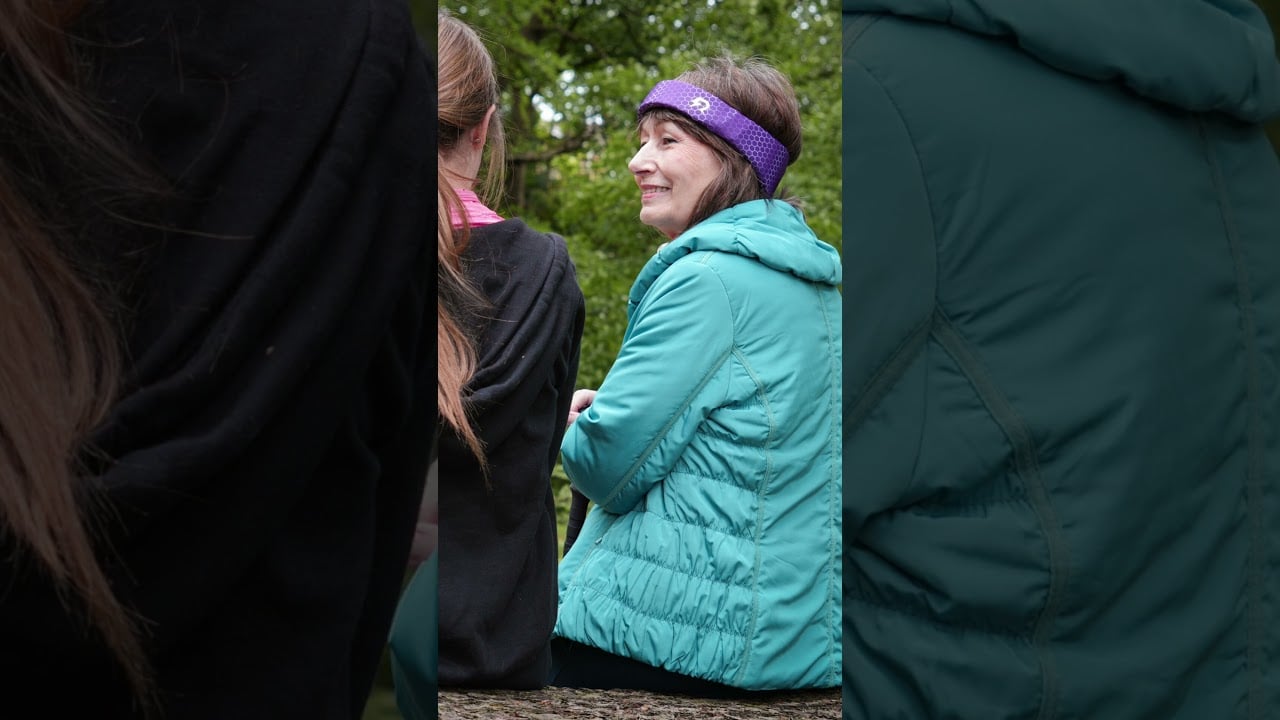
Watch: Understanding whether head protection is independently tested and certified as PPE is essential when comparing seizure helmets and medical headgear.
Is soft or padded headwear enough for cerebral palsy?
Not always.
If the real-world risk is limited to very minor impacts, basic padding may be all some families consider. But where there is a meaningful risk of falls, repeated head strikes, or more serious impacts, softness alone is a weak buying criterion.
A better question is: Is this product designed to help protect the brain, or does it mainly cushion the outside of the head?
That is where rotational force reduction becomes important. Real-world impacts are often oblique rather than perfectly straight-on, so the brain rotates inside the skull as well as accelerate linearly. Modern impact-testing models increasingly account for both [3, 4].
What is the best head protection for children and adults with cerebral palsy?
The best option is the one built around protective performance first.
That means prioritising head protection that is designed to:
- reduce impact severity
- reduce rotational force transmission
- meet credible PPE requirements
- be worn consistently in everyday life
Once those safety fundamentals are met, practical features still matter. A product needs to be wearable enough for real life, especially where protection may be needed regularly at home, in education, in care settings, or out in the community. Weight, comfort, hygiene, washability, and day-to-day usability should all be considered after protective credibility is established [2].
| Protection Comparison Criteria | Rezon Halos® | Ribcap | Danmar / soft helmets | Head Protex | HP1 / 2 / 3 Special Needs Helmet | Conventional sports headgear / scrum caps |
|---|---|---|---|---|---|---|
| Is the product designed to reduce brain injury risk? | Yes | No | No | No | No | No |
| Is the product CE / UKCA certified as PPE? | Yes. CE / UKCA Category II PPE | No PPE Classification | No PPE Classification | No PPE Classification | No PPE Classification | Typically no PPE Classification |
| Is the product a registered medical device? | Yes. FDA Registered (US). | No | No | No | No | No |
| Is rotational force reduction independently tested? | Yes. Up to 61%* | No publicly available testing | No publicly available testing | No publicly available testing | No publicly available testing | In some cases |
| Does the product have independent biomechanical testing? | Yes. Virginia Tech Helmet Lab 5-Star Rating | No published biomechanical testing | No published biomechanical testing | No published biomechanical testing | No published biomechanical testing | No World Rugby approved product has declared a 4- or 5-Star Virginia Tech rating |
| Is linear impact reduction independently tested? | Yes. Up to 64%* | No publicly available testing | No publicly available testing | No publicly available testing | No publicly available testing | In some cases |
| Is it designed for continuous wear? | Yes | No | No | No | No | No |
| Can it be worn when swimming or bathing? | Yes | No | No | No | No | No |
| Is it suitable for all ages? | Yes | No | No | No | No | No |
| Is it suitable for all hair types? | Yes | No | No | No | No | No |
| Is it machine washable? | Yes | No | No | No | No | In some cases |
| Can it be worn with glasses? | Yes | In some cases | In some cases | In some cases | In some cases | No |
| Can it be worn with cochlear implants and hearing aids? | Yes | In some cases | No | No | No | No |
This is where Rezon Halos® differs from other protective headgear on the market. Halos® is not a generic padded headwear, but a protective headband engineered around qualified rotational force reduction, the mechanics of brain injury, and continuous-wear practicality [11, 12, 13].
When should families or carers seek clinical advice?
Protective headwear should not replace medical review. If a child or adult with cerebral palsy has frequent falls, worsening mobility, changing neurological status, or repeated head impacts, clinical input is important [8, 9]. NICE guidance for adults with cerebral palsy supports ongoing review of function and wider health needs rather than assuming needs remain static over time [8].
Frequently asked questions about head protection for cerebral palsy
Author: Judith McMinn
