
Why Are Elderly Falls a Brain Protection Issue, Not Just a Frailty Issue?
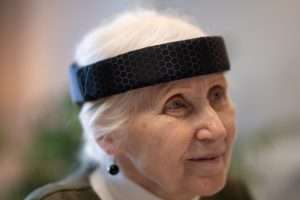
How serious is the elderly falls problem?
Falls are not a marginal risk in later life. They are one of the most predictable routes into crisis care.
The British House of Commons Public Accounts Committee found that, in 2024–25, GPs assessed only 17% of patients aged 65 and over for frailty. Among the 226,000 patients diagnosed with severe frailty, only 18% had a falls risk assessment and only 16% had a medication review, even though the GP contract says everyone with severe frailty should receive that support [1].
The Committee described this as “not acceptable care” [1].
That matters because frailty is not just a label. It is used to identify older people at increased risk of serious adverse outcomes, including falls, disability, hospital admission and the need for long-term care [1].
This is not a small system failure. It is a warning about what happens when proactive preventative care is squeezed out by pressure.
Elderly falls are one of the most predictable routes into crisis care.
The aim should always be to reduce falls.
Older people at risk need proper assessment, medication review, strength and balance support, vision checks, safer environments and joined-up care. NICE recommends comprehensive falls assessment and management for people who have fallen in the past year and are living with frailty, have been injured in a fall, have lost consciousness, have been unable to get up independently, or have had two or more falls [2].
But we need to be honest. Falls will still happen. Simply waiting until a fall happens and dealing with the consequences is not an acceptable approach to care.
A person may fall because of frailty, dizziness, Parkinson’s disease, dementia, seizures, poor balance, medication side effects, night-time disorientation or a previous injury. A care home can have good protocols and still face fall risk. A family can be vigilant and still not be in the room at the critical moment.
That is the missing logic in much of the public conversation.
Falls prevention is essential. But nothing can prevent all falls from happening.
The next question must be: what happens when the person does fall?
Why is brain trauma the consequence families fear most?
Not every fall causes serious physical harm. But the consequences are unpredictable.
A broken wrist is serious. A hip fracture can be devastating. NICE reports that falls are the most common cause of fragility fractures, and that 18% to 33% of people die within one year of a hip fracture [2].
But head impact is different.
Brain trauma can change a life immediately. A 2026 population-based study in Age and Ageing found that traumatic brain injury in older adults was associated with high mortality. One-month mortality after hospitalised TBI was 16.9% in patients aged 65–79 and 31% in patients aged 80–100 [3].
The same study found that falls were a major cause of traumatic brain injury and non-TBI trauma across both sexes. It also noted that low-energy falls are driving increased traumatic brain injury in older adults [3].
This is why elderly falls should not be seen only as a mobility issue, a hip-fracture issue or a care-home paperwork issue.
Elderly falls are a brain protection issue.
Why is the NHS not built to solve this alone?
The NHS is exceptional at saving people from disaster. It is far less well-designed to prevent the disaster from happening.
That is not a criticism of clinicians. It is a reality of a system under pressure.
The Public Accounts Committee warned that NHS England has overloaded GPs with new and expanding priorities. It also said that pressure to improve one area of care, particularly access and digital access, can have consequences elsewhere — in this case, support for people with frailty [1].
Recent national coverage, including The Guardian’s reporting on the Committee’s findings, has rightly brought public attention to overloaded general practice. But the deeper issue is not only GP workload [4].
It is a national ageing problem.
A crisis-weighted system is often better resourced to treat the fall after it happens than to prevent the injury before it occurs. Families, carers and care providers are left trying to manage the risk before it does.
That is where the conversation needs to change.
Who should protect the brain when fall risk remains?
Responsibility is shared.
The NHS must improve frailty assessment and follow-up. Care homes need practical fall-risk plans. Families need clear guidance. Charities and safety organisations need to keep raising awareness.
But when a person remains at risk despite sensible precautions, carers and families need tools that go beyond “try not to fall”.
A realistic plan has three layers:
- Reduce the likelihood of falling.
- Reduce the severity of injury if a fall happens.
- Preserve the person’s dignity and independence while doing both.
The third point matters. If protection is uncomfortable, embarrassing or impractical, it will not be worn. A product left on a chair, in a drawer or beside the bed protects no one.
Why is elderly head protection underused?
Part of the problem is cultural.
Many older people do not want to look medicalised. Families worry about dignity. Care homes worry about compliance. Clinicians may hesitate to suggest headwear that looks institutional or uncomfortable.
But there is also a product problem.
A lot of what has historically been available is bulky, medical-looking or difficult to wear continuously. Some products are soft and reassuring to look at, but are not legally UKCA/CE certified as protective equipment or independently tested to show how they manage head impact forces.
For families, that creates confusion.
If a product is being considered for brain protection, the question should not be: does it look padded?
The question should be: what is it certified and tested to do?

What should families ask about protective headwear for elderly falls?
Protective headwear for elderly fall risk should be assessed properly.
The key questions are simple:
- Is it CE/UKCA Category II PPE safety-certified?
- Has it been independently tested?
- Does it reduce rotational as well as linear force transmission?
- Can it be worn in daily life?
- Will the person tolerate it?
- Can it work with glasses, hearing aids, hair and normal routines?
- Is it dignified enough to be used before the crisis, not only after one?
These are practical questions. They are also safety questions.
The future of elderly head protection cannot be bulky equipment that people refuse to wear. It has to be protective technology that fits into daily life.
What is the new category of everyday brain protection?
This is where NeuroSure’s work sits.
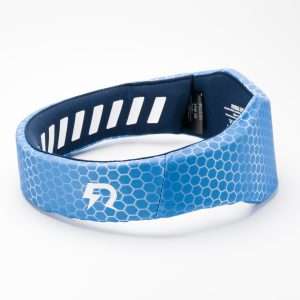
Rezon Halos® is a soft, flexible, CE/UKCA Category II PPE-certified protective headband that offers a discreet alternative to traditional medical helmets.
The technology inside Halos® is designed to help reduce rotational force transmission to the brain during head impacts. That matters because real-world falls do not usually happen in neat, straight lines. The head may hit the floor, furniture, a wall, a bathroom surface or a bedside cabinet at an angle. In those moments, rotational forces are part of the injury mechanism.
Halos® should not be presented as a guarantee. No head protection can prevent every brain injury. It should sit alongside falls assessment, medication review, mobility support, environmental changes and clinical care.
But for older adults who remain at risk, wearable brain protection can be a sensible additional layer.
What should change now?
The Public Accounts Committee report should not become another story that appears in the news and then disappears.
It should change the way we talk about elderly falls.
Falls are common. NICE reports that around one-third of people aged 65 and over, and around half of people aged 80 and over, fall at least once a year. In 2022/23, there were around 210,000 emergency hospital admissions in England related to falls among people aged 65 and over [2].
Globally, the World Health Organization says falls are the second leading cause of unintentional injury deaths worldwide, with an estimated 684,000 fatal falls each year. Adults over 60 suffer the greatest number of fatal falls [5].
Some falls are inevitable. The consequences vary. But traumatic brain injury is one of the outcomes families fear most, and older adults have much higher mortality after TBI [3].
So the question is not whether head protection is needed for every older person. It is not.
The question is whether we are identifying the people for whom head protection should be considered earlier. Waiting until they have suffered a fall is waiting too long.
For people living with severe frailty, dementia, Parkinson’s disease, epilepsy, repeated falls, medication-related instability or previous head impacts, brain protection should not be an afterthought.
It should be part of the care conversation.
Falls can be common in later life.
Serious brain injury should never be accepted as inevitable.
Author: Judith McMinn
