
Blood Thinners: Head Impacts & Brain Protection

Why can head impacts be more serious when taking blood thinners?
Blood thinners, more accurately called anticoagulants, are medicines that interfere with the process by which blood clots form. This is valuable when there is a risk of a harmful clot developing, but it also means that bleeding following an injury can be more difficult to control [1].
This is particularly relevant to head impacts.
A head impact exposes the brain to biomechanical forces that can damage brain tissue and blood vessels. If a head impact causes bleeding in the brain when you are taking an anticoagulant, this increases the concern because the body’s normal clotting response has been reduced.
The US Centers for Disease Control and Prevention (CDC) specifically warns that anticoagulants, including warfarin, rivaroxaban and apixaban may increase the risk of bleeding in the brain following traumatic brain injury [2]. UK NHS guidance similarly advises people taking anticoagulants to take extra care to avoid injury because they are more prone to bleeding if injured [1].
Which blood thinners can increase the risks associated with head impacts?
Commonly prescribed anticoagulants include warfarin, apixaban, rivaroxaban, dabigatran and edoxaban [3].
In the UK, patients will often know these medicines by their generic names, although brand names are also used. In the US, brand names are particularly common. These include Eliquis® (apixaban), Xarelto® (rivaroxaban), Pradaxa® (dabigatran), Savaysa® (edoxaban) and Coumadin® or Jantoven® (warfarin).
Although this list is not exhaustive and individual medicines work in different ways, they have something important in common when considering head protection: they reduce the blood’s ability to clot.
Why might someone be taking blood thinners?
Anticoagulants are prescribed when there is an increased risk of harmful blood clots developing or recurring.
Reasons can include:
- atrial fibrillation (AF);
- deep vein thrombosis (DVT);
- pulmonary embolism (PE);
- previous blood clots;
- reducing stroke risk in people with certain cardiovascular conditions;
- some heart valve conditions or procedures;
- particular circumstances following a stroke or heart attack; and
- periods of increased clotting risk, including after some forms of surgery.
The NHS identifies stroke, heart attack, DVT and pulmonary embolism among the serious problems associated with blood clots, while the American Heart Association identifies anticoagulants as a main treatment for venous thromboembolism and commonly uses them for stroke prevention in people with atrial fibrillation [3, 4].
The British Heart Foundation also notes that direct oral anticoagulants such as apixaban, rivaroxaban, dabigatran and edoxaban are widely used to reduce stroke risk in people with atrial fibrillation [5].

Does taking blood thinners mean you should think about protecting your head?
Taking an anticoagulant does not automatically mean that everyone needs to wear protective headwear.
However, head protection becomes particularly relevant when increased bleeding risk overlaps with an increased chance of falling or hitting the head.
For example, this could include someone taking anticoagulants who also experiences:
- recurrent falls;
- poor balance or reduced mobility;
- seizures;
- fainting or loss of consciousness;
- neurological conditions;
- frailty associated with older age; or
- previous or recurrent head impacts.
Some anticoagulant medicines can also cause dizziness in some people [6]. If someone already has balance difficulties, dizziness, fainting episodes or another factor that increases their likelihood of falling, it is worth considering the combined risk rather than looking at anticoagulation in isolation. There are essentially two overlapping risks:
1. What is the likelihood of a head impact happening? Falls, seizures, fainting, balance problems and neurological conditions can all increase exposure to head impacts.
2. What could happen if an impact causes a brain injury? Anticoagulants can make bleeding resulting from trauma more serious and difficult to control.
When both factors are present, reducing the transmission of forces to the brain in a head impact becomes particularly important.
Why are falls particularly relevant when taking blood thinners?
Falls are a significant cause of head injury, particularly among older adults. The CDC reports that falls are the most common cause of traumatic brain injury in older adults and specifically highlights the additional concern when an older person taking blood-thinning medication hits their head [2, 7].
This creates an important overlap for people taking anticoagulants who also have an increased fall risk. Someone may be taking warfarin, apixaban or another anticoagulant because of atrial fibrillation, a previous clot, stroke risk or another cardiovascular condition while also experiencing reduced mobility, balance difficulties or age-related fall risk.
For these individuals, head protection is not simply about preventing cuts or bruises. It is about reducing the biomechanical forces reaching the brain when a fall cannot always be prevented.
Watch: Kay’s personal experience with Rezon Halos®

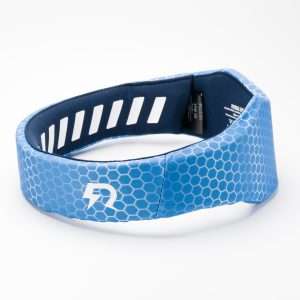
How can Rezon Halos® reduce the risk from head impacts?
During a head impact, the brain is exposed to both linear and rotational forces. Rotational movement is particularly important in brain injury biomechanics because rapid rotation causes deformation and strain within brain tissue. Research has linked rotational acceleration with brain tissue strain and traumatic brain injury mechanisms [8, 9].
Rezon Halos® is designed to reduce the transmission of damaging linear and rotational forces during an impact. By reducing the biomechanical forces transmitted to the brain, Halos® helps reduce the risk of impact-related brain injury.
This mechanism is especially relevant to someone taking anticoagulants. If an impact is capable of damaging brain tissue or blood vessels, reducing the severity of the forces involved can reduce the risk of that traumatic injury occurring.
For someone who takes blood thinners and has an increased likelihood of falls or recurrent head impacts, protective headwear can therefore provide an important additional layer of protection.
Frequently asked questions about blood thinners and head protection
Author: Alex Reily
