
Head Injuries in Older People: Why the Consequences Can Be Life-Changing
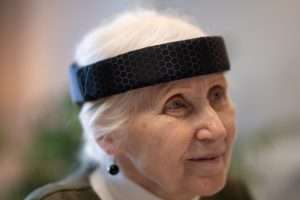
Older age increases both fall risk and vulnerability to head injury
Older people are not just more likely to fall. There are also physiological reasons why a head impact can become more serious with age.
Falls risk can increase as a result of changes in gait, balance, mobility, muscle strength and vision, as well as medication use and long-term conditions such as dementia or Parkinson’s disease. These are all factors recognised by NICE when assessing falls risk in older people [3]. Other life events, including a stroke or surgery, can also have a huge impact on balance and increase the risk of falls in the elderly.
This is why falls should be considered a brain protection issue as well as a mobility or frailty issue.
Age can also change what happens to the brain when an impact occurs.
As the brain loses volume with age, the space between the brain and skull can increase. This can place greater strain on the bridging veins that cross this space and increase their susceptibility to injury during head trauma. Research into cerebral atrophy and bridging-vein mechanics supports this relationship between ageing and increased vulnerability to head injury [4].
Subdural bleeding is therefore an important concern following head injury in older people. The use of anticoagulant and antiplatelet medicines, which becomes more common with age, can add further complexity when head injury occurs [5].
A seemingly straightforward fall and head impact from standing height can have very different consequences for an older brain.
Head protection has to work in everyday life
Falls prevention remains fundamental, but not every fall can be prevented.
Strength and balance programmes, medication reviews, management of visual impairment, home hazard assessments and appropriate clinical care can all reduce falls risk and are recommended within established falls-prevention guidance [3]. But it is not possible to eliminate every fall, and with increasing age, the likelihood of a fall increases too.
For people with persistent balance problems, neurological conditions, previous falls or other significant risk factors, reducing the risk of consequences from a head impact can provide an additional layer of protection alongside falls prevention.
But that protection also has to be realistic for everyday life.
Many traditional helmet-style solutions are bulky, highly visible, hot and obstructive to wear, or designed for specific activities rather than continuous daily wear. Conventional padded medical headgear can also vary considerably in design purpose, testing and certification, with many “medical helmets” focused on superficial cuts and scrapes instead of brain protection.
Our guide to head protection options available in elderly care looks at these differences in more detail, including the practical importance of comfort, discretion, dignity and wearability. These factors matter particularly for people who are still living independently.
Head protection that feels too conspicuous or restrictive to wear to the shops, on a walk, when meeting friends or around the home has obvious limitations as an everyday solution. Protective headwear needs to support independence rather than make somebody feel unnecessarily medicalised by it.
Discreet head protection still needs credible safety evidence
Discretion cannot, however, come at the expense of protection. The primary requirement of head protection for the elderly is that it protects the brain in falls.
When headwear is intended to protect against brain injury, its protective status and evidence base matter. In Great Britain, HSE guidance states that PPE placed on the market must meet applicable conformity requirements and carry the appropriate CE or UKCA marking [6].
This is why NeuroSure places such importance on understanding the difference between appearance, padding, certification and independently measured performance.
Rezon Halos® is CE/UKCA Category II PPE. The Rezon Halos® certification information explains the conformity framework, standards used and independent type-examination documentation in detail.
Independent performance testing also provides additional evidence about how protective headwear behaves under defined impact conditions. Virginia Tech Helmet Lab independently awarded Rezon Halos® a five-star rating, with a STAR score of 0.26 in testing [7].
That distinction is important. People choosing protective headwear should be able to understand both whether a product has credible protective certification and what independent testing says about its impact performance.
It is important to compare medical head protection on the merits of certification and independent testing, not just by how padded it looks.
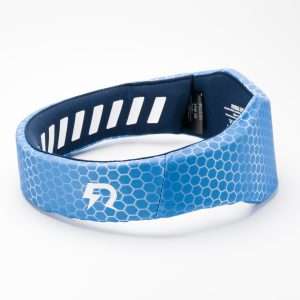
This is why we brought Rezon Halos® to the medical market
Older people at risk of falls did not simply need another medical helmet. They needed credible head protection that could fit into normal life.
Rezon Halos® was designed as a lightweight, discreet protective headband using patented Rotection® technology to reduce the transmission of both rotational and linear forces during head impacts. Its design, testing and certification are explained in more detail within our guide to how Rezon Halos protects the brain during an impact.
It can be worn with glasses and hearing aids and is designed for prolonged everyday use without the appearance of conventional bulky medical headgear. The purpose is not to medicalise everyday life. It is to provide people who have a genuine risk of head impact with an additional layer of protection while supporting confidence, dignity and independence.
No protective headwear can prevent every brain injury, but the right medical helmet for elderly falls can reduce the risk of life-changing or life-ending injury, by reducing the transmission of rotational forces, when a fall and head impact do occur.
The difference protection can make to confidence
For people who have already experienced a serious fall, the psychological consequences can be significant too. Fear of another fall can affect activity, confidence and willingness to leave the home.
Fenella purchased Rezon Halos® after experiencing head trauma in two falls and living with poor balance caused by neuropathy. Her description of what changed afterwards is simple:
“I feel so much more confident. I have already recommended it to others.” [8].
Kay, an older Rezon Halos® wearer in the United States, had fallen twice and hit her forehead. Her reaction to wearing discreet protection captures exactly why appearance and dignity matter:
“I’m very pleased with the comfort level, the fit, and the color. I think it makes me look like Wonder Woman.” [8].
These experiences matter because successful head protection is not only about protective performance. It also has to work for the person who is expected to wear it.
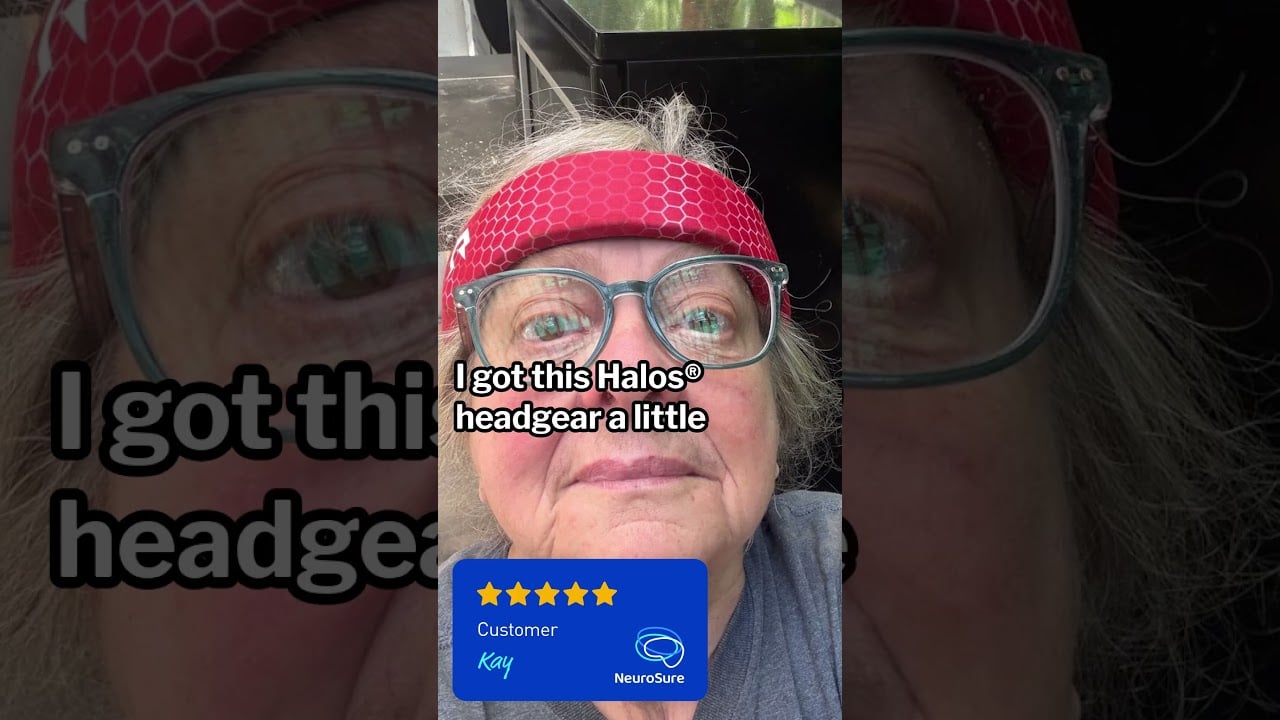
Watch: Kay’s personal experience with Rezon Halos®

Protecting independence means protecting the brain
Falls prevention will always be essential in elderly care. But falls prevention alone cannot remove every risk.
For older people with recurrent falls, balance disorders, neurological conditions or other significant risk factors, the potential consequences of a head impact deserve far greater attention.
A serious head injury can change mobility, cognition, confidence and independence in seconds. And the consequences can last for the rest of their life. Protecting older people therefore means thinking beyond trying to prevent the fall itself.
Protecting independence means protecting the brain as well as preventing the fall.
Author: Judith McMinn
