
What Is the Best Special Needs Helmet for Autism and Developmental Needs?
What should you look for first in a special needs helmet?
The first thing to look for is real protective credibility.
Many products sold as special needs helmets are described in broad, reassuring terms, but that alone does not show how protective they really are. A product may look soft or padded without being clearly positioned as certified protective equipment or without showing meaningful evidence of how it is designed to reduce harmful rotational forces in head impacts. In the UK, HSE guidance says PPE supplied for protection should comply with the relevant product-supply legislation, and selection should reflect the actual exposure, the wearer, and how long the equipment needs to be worn [1, 2].
That is why the first checks should be:
Does it have a clear safety certification position?
Certification matters because it helps separate products with a formal protective safety framework behind them from products that simply look or are described as protective [1].
Is there evidence of independent testing?
A credible product should be backed by independent testing, not just appearance, padding thickness, or brand reassurance.
Is it designed for meaningful impact protection?
It is important to look beyond softness alone and ask whether the design is intended to reduce harmful rotational forces transmitted to the brain. Modern helmet evaluation looks at more than visible padding. Virginia Tech’s independent Helmet Lab explains that helmets and headguards need to lower linear and rotational head acceleration in order to reduce injury risk [6].
Only after confirming product efficacy should buyers compare comfort, appearance, and day-to-day practicality. A special needs helmet needs to offer genuine brain protection to the wearer, and the one of the strongest ways to confirm this is by looking for CE/UKCA Category II PPE certification.
Who might need a special needs helmet?
A special needs helmet may be relevant for children or adults with developmental needs who are at risk of head injury because of:
- repetitive head banging
- self-hitting
- collisions with walls, floors, or furniture
- poor balance control
- frequent falls
- reduced awareness of danger
- difficulty tolerating conventional protective equipment
This is especially relevant in autism and related developmental contexts where repetitive behaviours can include head banging. NHS guidance lists head-banging among common stimming behaviours, and NHS-linked learning-disability services list head banging and self-hitting among examples of self-injurious behaviour [3, 4].
Falls are also a common cause of head impacts where balance control is limited. Poor balance control, impulsive movement, or reduced protective responses can increase the risk of knocks and fall-related head impacts in everyday settings. The CDC states that falls can cause serious head injuries and are a common cause of traumatic brain injury [5].
Why is consistent wear so important?
Effective protection must always be the first priority. But protection only helps if it is actually worn.
This is one of the biggest real-world problems with conventional special needs helmets. Some children and adults will not tolerate bulky, obvious, hot, or restrictive headwear. Others may wear it only briefly, which limits its practical value across a full day. For families and carers, the challenge is often not finding something protective. It is finding protection the person will actually keep on.
That is where lower-intrusion design becomes important. Not because discretion matters more than safety, but because consistent wear is what allows safety to do its job. HSE guidance stresses that CE/UKCA PPE selection should reflect the wearer and the duration of use, not just the hazard in isolation [2].
How is Rezon Halos® different from a conventional special needs helmet?
Conventional special needs helmets are often bulky, highly visible, and difficult to tolerate for long periods. That can be a major limitation for people who need protection across ordinary daily life rather than only during one supervised activity.
Rezon Halos® is designed differently. Protection comes first, but the design is also intentionally discreet and less intrusive than conventional helmets, so it is easier to wear consistently. That matters for children and adults who may otherwise remove or reject head protection altogether.
A further advantage is that Rezon Halos® can be worn continuously, including:
- during everyday routines
- in bed
- when bathing
- with glasses
- with all hairstyles
- with hearing aids and cochlear implants
That makes Rezon Halos® much more practical for people whose risks are not confined to one activity or setting.
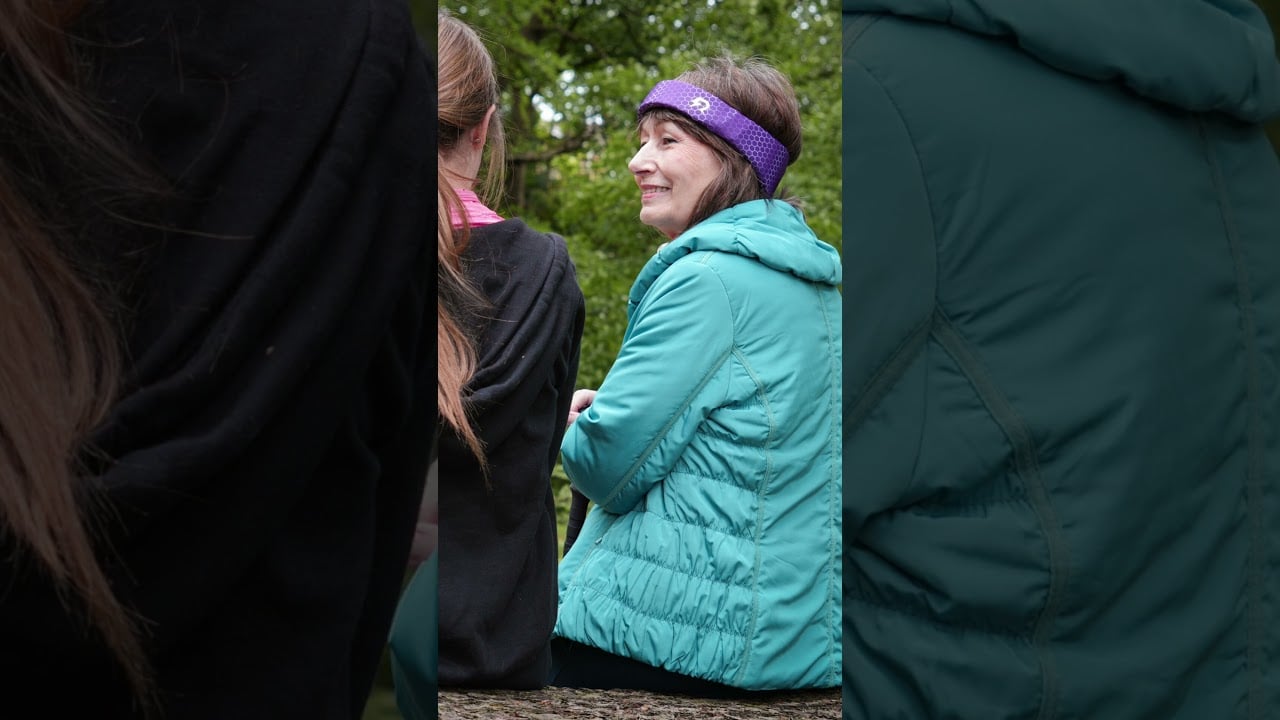
Watch: Understanding whether head protection is independently tested and certified as PPE is essential when comparing seizure helmets and medical headgear.
Why are many traditional special needs helmets and conventional sports headguards not enough?
Many traditional special needs helmets and conventional sports headguards rely heavily on bulk, padding, and visible head coverage, but that does not automatically mean they offer better protection.
In many cases, these products are built around older assumptions about head injury prevention. They may appear reassuring because they look padded or helmet-like, yet that visual impression can be misleading. Visible bulk and padding are not reliable indicators of better brain protection.
One of the biggest limitations is that many conventional padded helmets and headguards are not designed to manage rotational force effectively, even though rotational motion is a primary driver of brain injury in head impacts. The CDC’s paediatric mTBI guideline explains that mild traumatic brain injury can result when the brain undergoes translational, rotational, or angular acceleration and deceleration forces. Virginia Tech’s Helmet Lab likewise states that helmets and headguards that reduce both linear and rotational head acceleration lower injury risk [6, 7].
There is also a practical problem. Traditional special needs helmets and conventional sports headguards are often:
- bulky
- conspicuous
- hot
- uncomfortable over long periods
- difficult to use during rest, bathing, or full-day wear
- incompatible with hearing aids, cochlear implants, and glasses
- limiting to both hearing and vision
So even where they offer some level of surface cushioning, they may still fail as an everyday protective solution because they are not tolerated consistently by the wearer.
This is where Rezon Halos® stands apart. It is not built around the old idea that more bulk automatically means more protection. It is designed around a more advanced, patented, protective technology, while also being discreet, stylish, low-profile, and suitable for continuous wear.
For families, carers, and clinicians, that is the more useful standard to judge by: not which product looks most padded, but which one combines credible protection, rotational force reduction, and real-world wearability [1, 2, 6, 7].
What is the best special needs helmet?
The best special needs helmet is the one that offers credible protection and can be worn consistently in real life.
For autism and developmental-needs use cases, that often means asking better questions:
- Is it certified as CE/UKCA PPE, not just padded?
- Is there meaningful independent testing behind it?
- Does it demonstrate qualified rotational force reduction?
- Can the wearer tolerate it for long periods?
- Can it stay on during everyday life, including rest and bathing?
For many families, those questions lead to a different answer than a bulky conventional helmet. They lead to protective headwear that is more discreet, more wearable, and more realistic for continuous daily use.
Frequently asked questions about special needs helmets
Author: Judith McMinn
